Application-Specific Solutions
Seating and equipment that ordinary automotive belts do not suit — operator cabs, suspension seats, static workstations and specialised transport seating, frequently in environments that age webbing and hardware far faster than a car interior does.
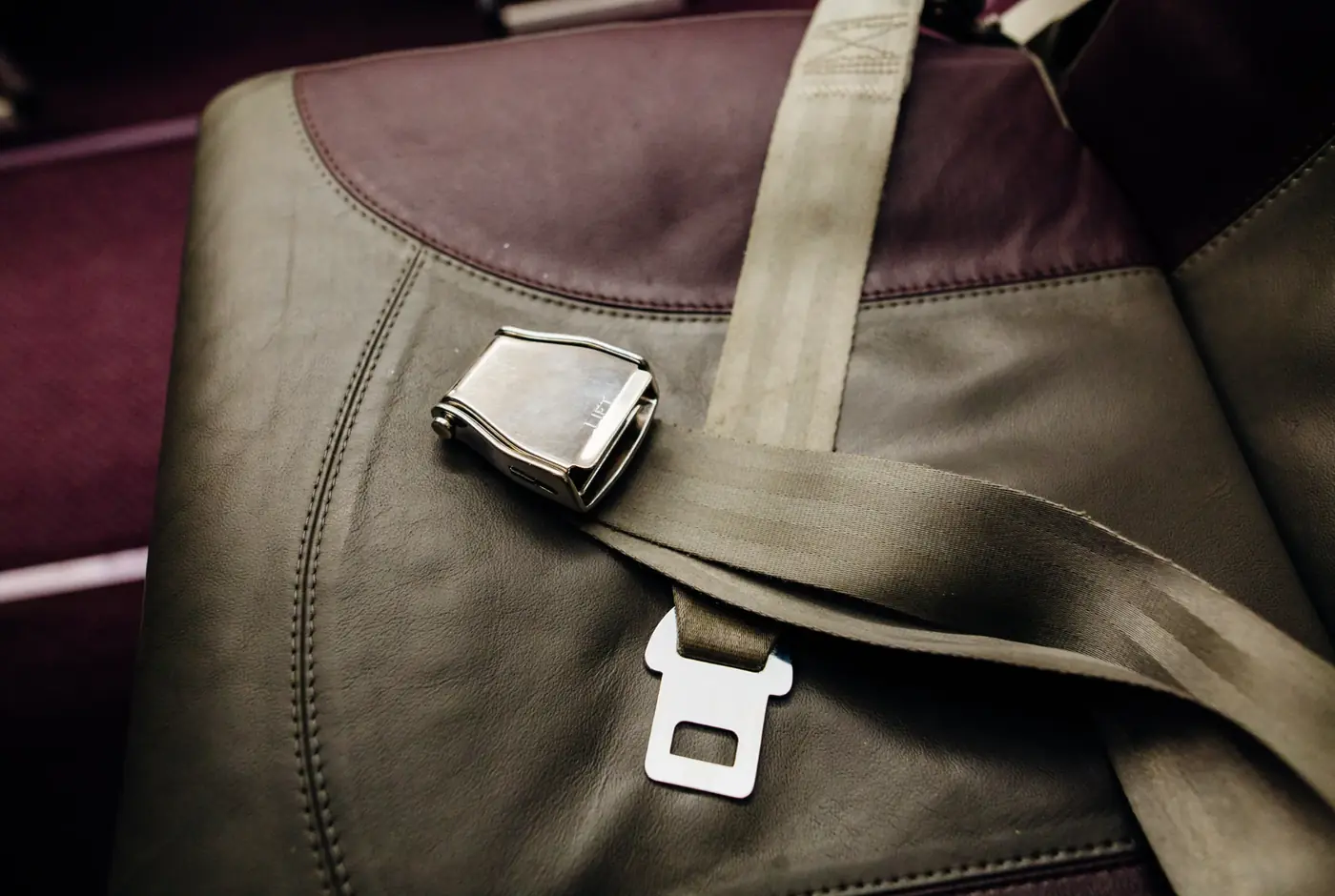 Lift-latch metal buckle
When the automotive catalogue simply does not apply
A significant share of restraint requirements sit outside passenger vehicles altogether. Tractor and forklift cabs, crane and excavator operator seats, static workstation seating, specialised transport arrangements and purpose-built machinery all need occupant restraint — and almost none of them can take an automotive belt off the shelf and expect it to be right.
Three things differ. The anchorage geometry is usually seat-mounted rather than structure-mounted, because the seat itself is the reference frame and may be on a suspension mechanism that moves independently of the machine. The belt format is often simpler — static two-point arrangements are common and entirely appropriate where the operator does not need to move far. And the environment is frequently far harsher: dust, vibration, moisture, direct sunlight, temperature swings and chemical exposure all age webbing and hardware faster than a passenger cabin ever will.
These requirements are handled individually. We work from the seat, the machine and the operating environment rather than from a part number, and we are candid when a requirement is one we cannot properly specify — which does happen, and is a better answer than a confident guess.
Key features
- Seat-mounted anchorage formats — for suspension seats and independent seat frames where structure mounting is not available or not appropriate
- Static and simplified arrangements — two-point formats where an operator does not need the movement range a retractor provides
- Environment-aware selection — webbing and hardware chosen with dust, moisture, UV exposure and vibration in mind
- Alternative release hardware — including lift-latch and other formats where a standard press-release buckle is not what the seating uses
- Specified case by case — these requirements are worked through individually rather than picked from a shelf
- Candid about limits — where we cannot properly specify an application, we say so rather than supply something approximate
Formats beyond the automotive standard
Alternative buckle hardware, multi-strap arrangements and simplified static formats — all common outside passenger vehicles, all uncommon inside them.
SELECT AN IMAGE
Images are representative of the product family. The exact item supplied is confirmed against your fitment before dispatch.
Equipment and seating we are asked about
The common thread is that the seat, not the vehicle body, is usually the reference frame.
Tractors & agricultural machinery
Suspension seats, seat-mounted anchorages, and heavy exposure to dust, moisture and sunlight that ages webbing quickly.
Forklifts & material handling
High cycle counts in short operating periods, with restraint hardware that has to tolerate repeated rapid use.
Cranes & earthmoving
Operator seats mounted on independently moving structures, frequently with simplified static belt formats.
Static operator workstations
Seating that does not travel but still requires restraint, where automotive assumptions about belt travel do not apply.
Specialised transport seating
Purpose-built seating arrangements whose anchorage layout does not correspond to any standard automotive position.
Site and utility vehicles
Mixed-use machines that spend their lives outdoors, where environmental ageing drives the replacement cycle more than usage does.
How we work through a non-standard requirement
With no catalogue equivalent to fall back on, the specification is built from the seat outward.
Start with the seat, not the machine
The seat make and model, whether it is suspension-mounted, and where its anchorage points sit. On this kind of equipment the seat is the reference frame.
Establish operator movement
How far the operator needs to move while belted. This is what decides whether a static format is appropriate or a retractor is genuinely required.
Characterise the environment
Dust, water, direct sun, temperature range, vibration and any chemical exposure. Environment often drives the replacement interval more than usage does.
Identify the release hardware in use
Standard press-release, lift-latch or something else. Operators trained on one release action should not be handed another without a deliberate decision.
A note on responsibility
Requirements vary by vehicle, equipment and application. Where a manufacturer specifies particular restraint parts, torque values or fitting procedures for a position, that guidance should be followed and the work carried out by a competent technician. We supply components and help you identify what suits a fitment; we do not inspect your vehicle, and nothing on this page substitutes for a professional assessment of it.
Related product families
Seat Belt Assemblies
Complete matched sets, including the two-point static formats these applications most often use.
Seat Belt Components
Individual hardware where a specific part on an operator seat has failed.
Automotive Seat Belts
The standard road-going range, for the vehicles alongside the equipment in a mixed fleet.
Working on something non-standard?
Tell us the equipment, the seat make, how the restraint currently mounts and what the operating environment is like. These are the requirements we most enjoy working through.