One product family, six very different fitting problems.
A belt for a hatchback rear bench and a belt for a crane operator's seat share a purpose and share almost nothing else. Anchorage geometry, belt travel, retractor behaviour and environmental exposure all shift with the application — and each shift changes the part.
 Commercial passenger transport
Four variables do nearly all the work
Whatever the sector, a restraint requirement resolves into the same four questions. What differs is the answers — and how far apart those answers sit from one industry to the next.
Anchorage geometry
How many mounting points, where they sit, and whether they belong to the seat or to the structure around it.
Belt travel
How far the occupant and the seat move, and therefore how much webbing must pay out and return.
Retractor behaviour
Whether a retractor belongs in the position at all, and if so how it must be oriented to sense correctly.
Environmental exposure
Dust, moisture, sunlight, vibration and temperature — the factors that drive replacement intervals.
 01 / Passenger vehicles
Passenger Vehicles
Hatchbacks, sedans, SUVs and MPVs — the most standardised end of the range, and the one where the greatest number of near-identical-looking parts are genuinely not interchangeable.
Anchorage points here are designed into the body structure, three-point retractor belts are near-universal at outer positions, and centre-rear positions may use either a static lap belt or a full three-point arrangement depending on how the vehicle was built. The complication is not variety of format — it is that a single model year can differ from the next in webbing length, tongue profile or retractor mounting angle without any visible external clue.
Application considerations
- Position matters more than model — front outer, rear outer and centre rear are different parts within the same car.
- Seat travel drives webbing length — check at the furthest, most reclined setting rather than at mid-position.
- Tongue and buckle pairing — if only the belt is being replaced, confirm the tongue seats properly in the buckle you are keeping.


Commercial Vehicles
Goods carriers, buses, tempo travellers and staff transport — where the belts do far more work per week, and where cabins are frequently body-built rather than factory-finished.
The defining characteristic is cycle count. A commercial driver's belt may be buckled and released twenty or thirty times a day, every day, and it is the retractor return and the release-button action that degrade first — often long before the webbing shows anything worth noticing. Passenger positions in staff transport and buses see the same pattern at even higher rates.
The second characteristic is body building. Where seating has been added, moved or rearranged after the chassis left the manufacturer, the original anchorage assumptions may no longer describe the vehicle in front of you, and each position has to be specified on its own terms.
Application considerations
- Check retraction, not just webbing — incomplete return is the earliest reliable sign of a tiring mechanism.
- Standardise where you can — one specification across a fleet simplifies stock, training and future replacement.
- Re-specify body-built positions — do not assume a rearranged cabin retains the original anchorage layout.
Industrial Vehicles & Equipment
Tractors, forklifts, cranes, excavators and site machinery — where the seat, not the vehicle body, is usually the reference frame, and where the environment ages parts faster than the operator does.
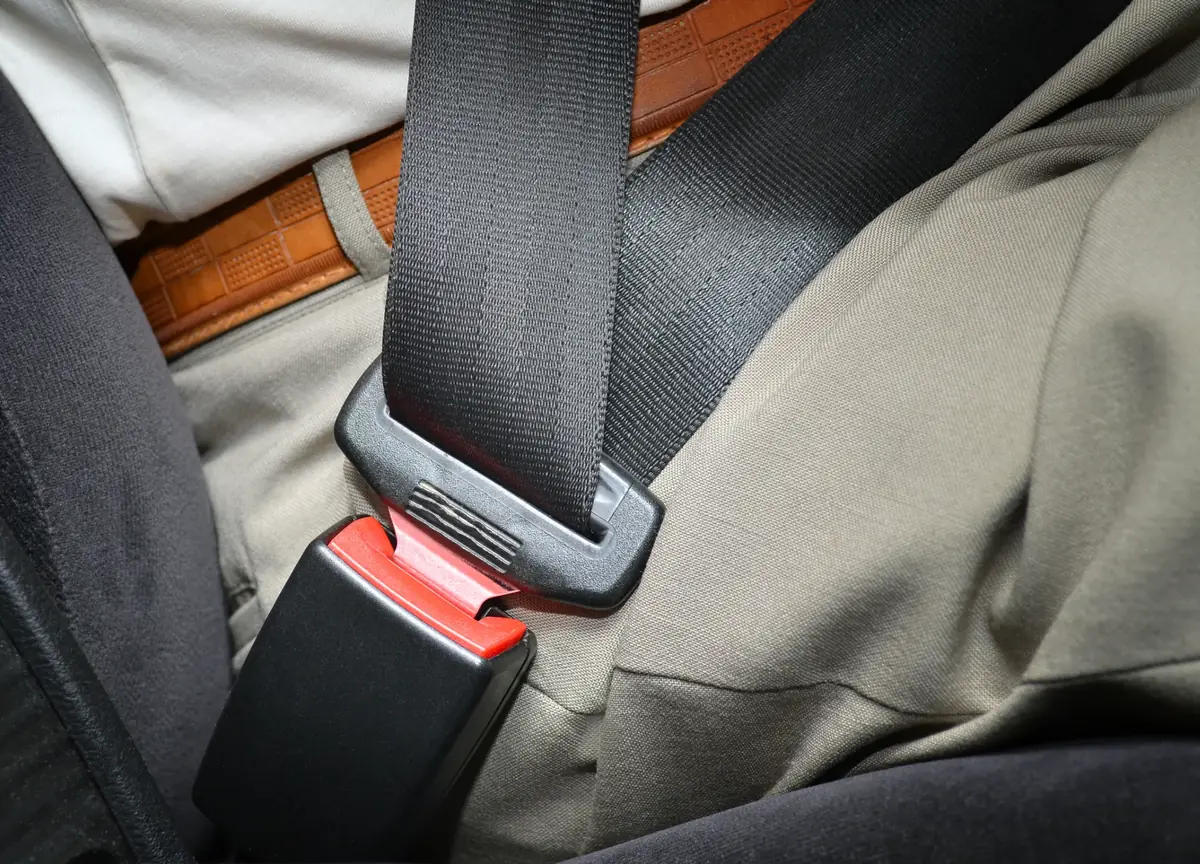 Seat-mounted restraint
Industrial seating breaks several automotive assumptions at once. The seat is frequently on a suspension mechanism that moves independently of the machine, so anchorages are mounted to the seat frame rather than to the structure. Operators often do not need to move far while belted, which makes a static two-point format entirely appropriate where a car would use a retractor. And the machine spends its life outdoors.
That last point matters more than it first appears. Dust works into buckle housings and stiffens release action. Ultraviolet exposure gradually weakens and fades webbing. Moisture corrodes anchor bolts and plating. Vibration loosens fasteners that were correctly torqued when fitted. On this kind of equipment the replacement interval is driven at least as much by environment as by hours of use.
- Anchorage
- Usually seat-mounted; the seat frame is the reference, not the machine structure
- Common format
- Static two-point arrangements are widespread and appropriate
- Wear drivers
- Dust ingress, UV exposure, moisture, vibration, temperature cycling
- Inspection cadence
- More frequent than road vehicles, and driven by conditions rather than mileage
Fleet & Mobility Operations
Taxi and ride-hail fleets, driving schools, rental operations and corporate transport — where the interesting problem is not any single belt but the programme that keeps several hundred of them in usable condition.
Standardise the specification
Agreeing one belt specification per vehicle type turns an unpredictable maintenance item into a plannable one, and makes it far easier to spot when something non-standard has been fitted.
Inspect on a schedule
A short, repeatable visual and functional check at each service interval catches degradation long before it becomes a vehicle-off-road event.
Hold a small buffer
A handful of the most-used specifications on the shelf removes the single most common cause of avoidable downtime in this category.
Keep one supply thread
Repeat requirements recorded against your account mean a standard belt does not have to be re-specified from scratch on every order.
What high-cycle use actually wears out
In fleet vehicles, webbing is rarely the first thing to fail. Retractor return slows and becomes incomplete, so the belt starts hanging slack rather than lying against the occupant. Release buttons collect grit and need progressively more force. Pillar loops roughen and begin to drag. All three are noticeable to a driver long before they are visible on a walk-round inspection — which is why asking drivers what they have noticed is a genuinely useful part of a fleet inspection routine.
 05 / Specialised seating
Specialised & Non-Standard Seating
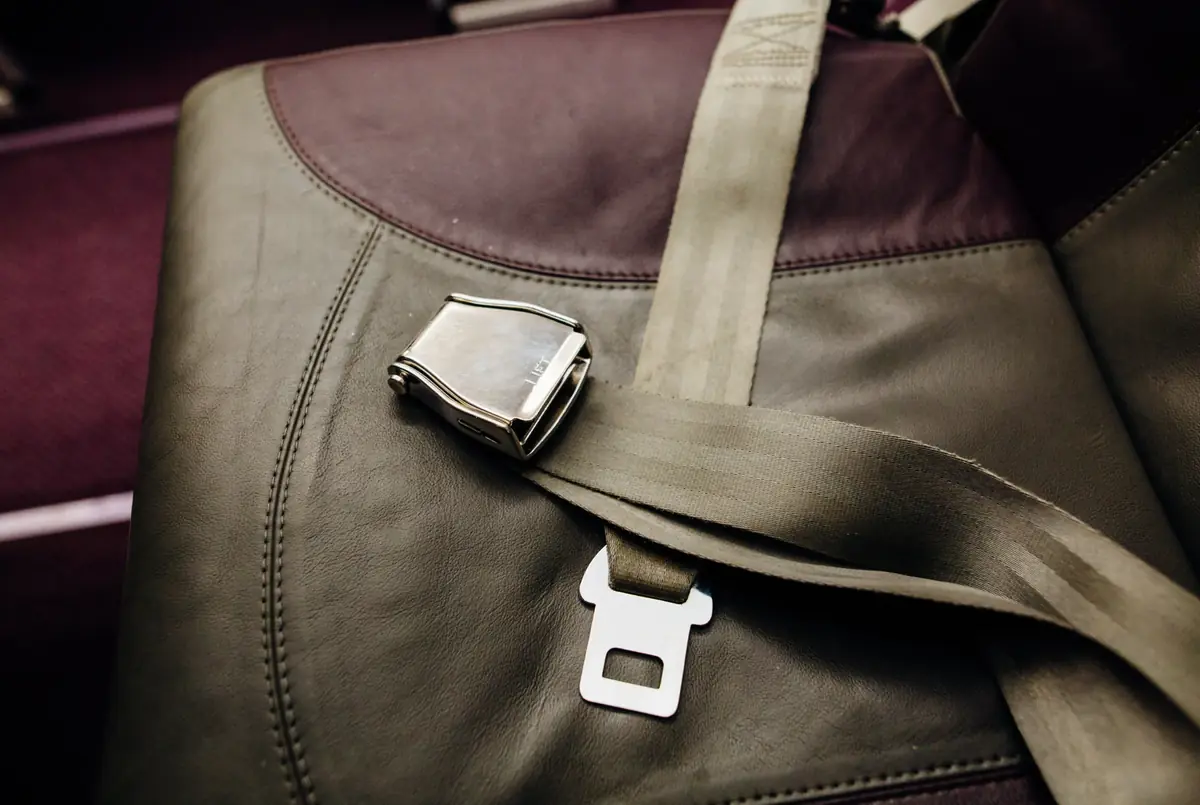
Purpose-built seating arrangements, static operator workstations and transport formats whose anchorage layout does not correspond to any standard automotive position.
These requirements arrive without a catalogue equivalent to work from, and they are specified from the seat outward: what the seat is, how it mounts, how far the occupant needs to move while restrained, and what release hardware the operators are already trained on. That last point is worth stating plainly — handing an operator a different release action from the one they know is a decision, not a detail, and it should be made deliberately.
We are candid about the limits here. Some specialised requirements sit outside what we can properly specify, and where that is the case we say so rather than supply something approximate and hope.
Occupant Restraint Across Seating Types
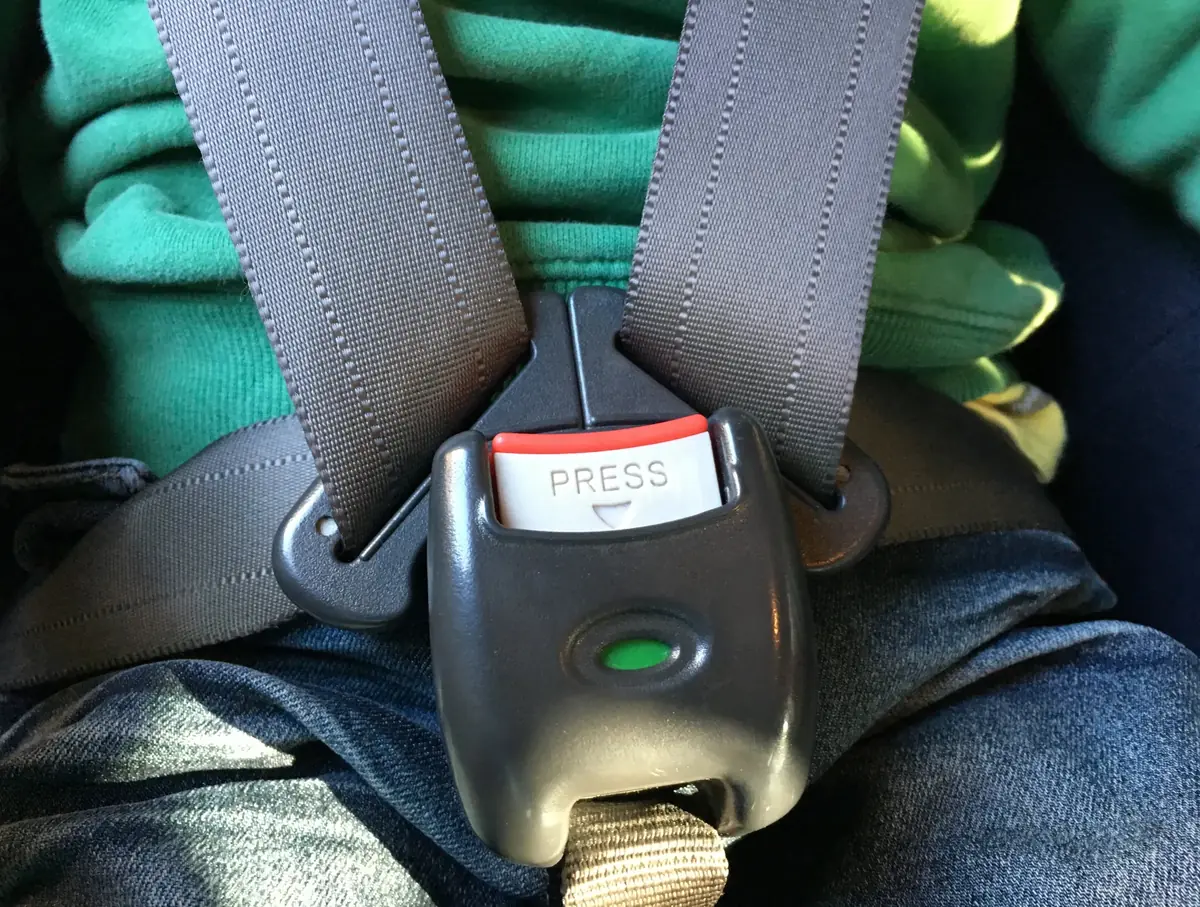
Vehicles carry occupants of very different sizes and postures, and the same seat position may be used quite differently from one journey to the next. Where a seat is used with an additional restraint arrangement, or where seating is designed around a specific occupant type, the compatibility between the vehicle belt and that arrangement is a matter for the manufacturers of both.
Our role in these situations is bounded and we would rather state it clearly than imply more. We can supply belts and components that suit a vehicle position and explain what a part is designed to do. We cannot advise on whether a particular restraint arrangement is appropriate for a particular occupant — that guidance comes from the vehicle manufacturer, the manufacturer of any additional restraint device, and the applicable requirements for your region and use case.
Not sure which of these describes your requirement?
Most of them overlap in practice — a transport operator may run passenger vehicles, goods carriers and yard equipment from one workshop. Tell us what you have and we will work through it with you.