We supply one thing, and we try to supply it properly.
Seat Belt Distributor exists to make the restraint side of a build, a repair or a fleet refresh straightforward — by knowing the product family well enough to ask the right questions before anything is quoted, packed or shipped.
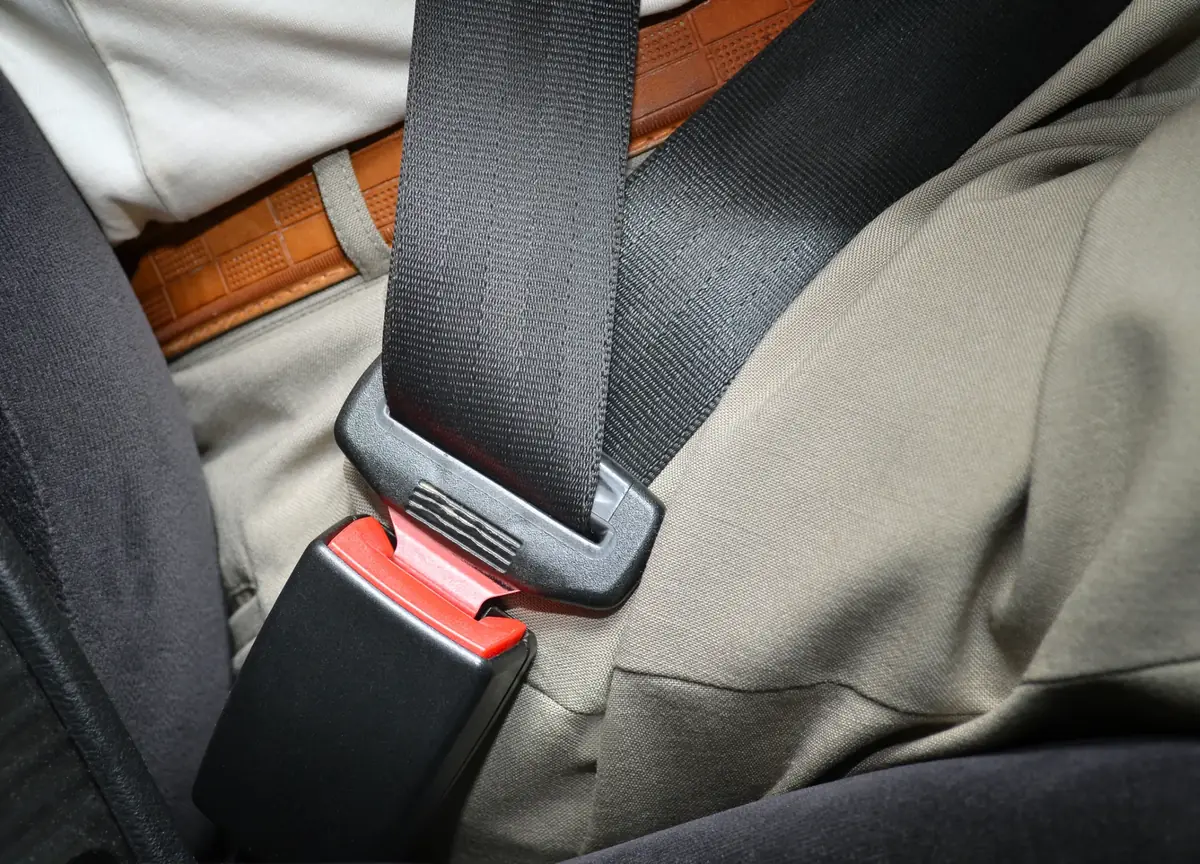
 Three-point restraint in use
Seat Belt Distributor in plain terms
We are a distributor and supplier of seat belts and the parts that make up a seat belt system: webbing assemblies, latch tongues, buckles, retractors, anchor plates, pillar loops and the fasteners and trim that hold it all in place. Our customers are workshops, vehicle body builders, seat manufacturers, fleet and transport operators, and industrial equipment builders who need restraint components that suit the machine in front of them.
What we are not is a general spares counter that happens to stock belts. Restraint hardware has its own logic — anchorage geometry, webbing travel, retractor behaviour, stalk length, bolt thread and seat movement all interact — and a distributor who does not track that logic tends to send parts that bolt on but do not suit. Concentrating on this one family is what lets us be useful rather than merely available.
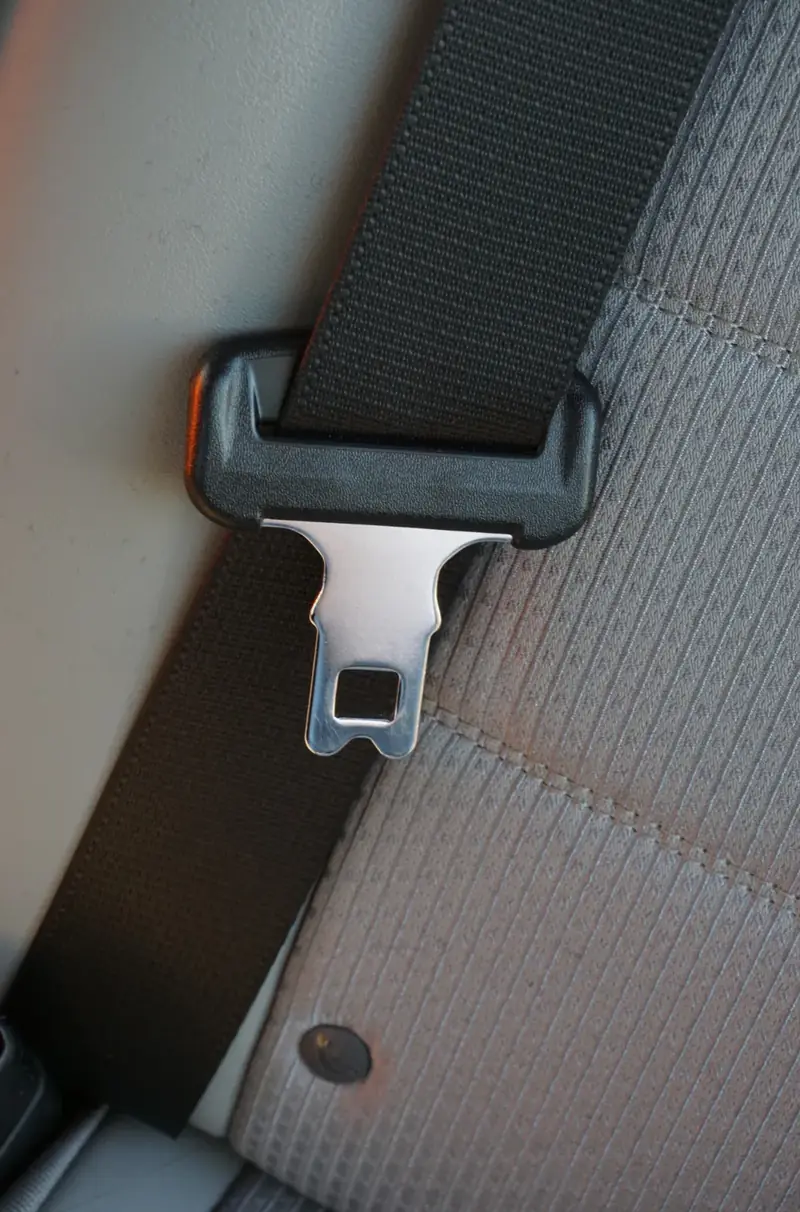
“A restraint that bolts on is not the same as a restraint that suits the seat. The difference between the two is a conversation that takes about four minutes — and it is the conversation we would rather have before an order than after one.” How we approach every enquiry
How an enquiry travels through us
There is no complicated process here, but there is a deliberate one. Each step exists because skipping it is how the wrong part ends up on a workbench three days later.
Understand the requirement
What vehicle or equipment, which seat position, how many belts, and whether this is a repair, a replacement or a new build.
Establish the fitment
Mounting points, thread sizes, stalk lengths, webbing travel and whether a retractor is involved. Photographs help enormously here.
Confirm before quoting
We restate what we believe you need in writing, so any misunderstanding surfaces while it is still cheap to correct.
Check, pack and dispatch
Webbing, stitching, hardware and latching are checked, the consignment is packed and you are told when it left and how to track it.
Why dependable supply matters more here than in most categories
In a lot of parts categories, a delay is an inconvenience. In this one it frequently means a vehicle cannot be handed back, a body build cannot be signed off, or a machine cannot be released to an operator. A restraint is rarely optional, so a supply gap becomes an operational stoppage very quickly.
That shapes how we work. We keep our depth in the formats that get asked for repeatedly rather than spreading thinly across every possible variant. Where something has to be brought in, we say so at the point of enquiry rather than after an order is placed — an accurate two-week answer is far more useful to a workshop than an optimistic three-day one.
- Written confirmation of exactly what is being supplied before it is packed.
- Honest lead times — including the uncomfortable ones.
- One point of contact from first enquiry through to dispatch.
- Repeat orders kept on file so a fleet's standard belt does not have to be re-specified each time.
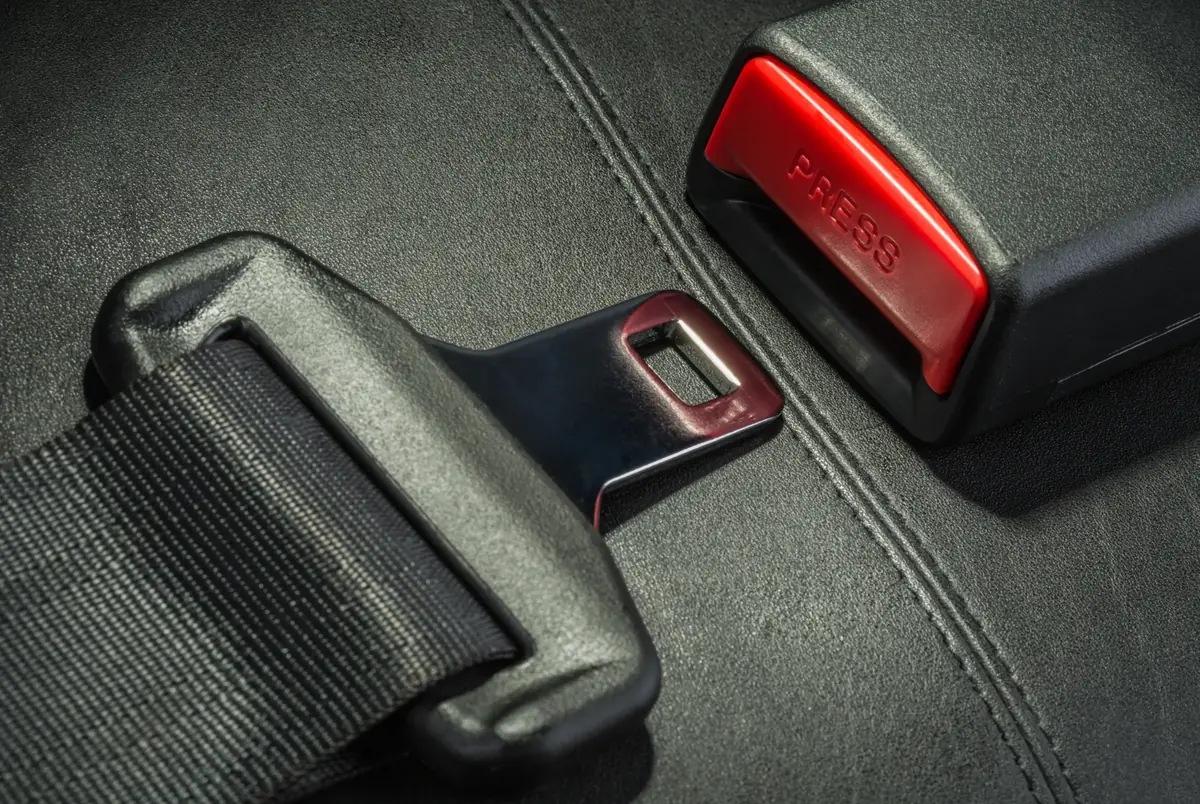 Tongue geometry & buckle match
The questions we ask, and why each one changes the part
Customers sometimes find it odd that a belt order needs a conversation. The reason is that four fairly ordinary variables can each independently make a part unusable.
- Anchorage layout
- Two-point, three-point or a seat-integrated arrangement — and whether the mounting points are on the seat frame or the vehicle structure. This decides the entire assembly format.
- Belt travel
- How far the seat slides and reclines, and how much webbing must pay out and return. A belt that is correct at mid-position can run short at full extension.
- Retractor behaviour
- Whether the position needs a retractor at all, and if so how it must be oriented to lock as intended. Mounting angle is not a cosmetic detail.
- Hardware interface
- Bolt thread and length, stalk length, tongue profile and buckle type. A tongue that will not seat properly in the buckle you already have is a non-starter.
What “quality-focused” means when you cannot test every part yourself
We are a distributor, not a test house. We do not carry out destructive testing, we do not issue certification, and we do not make performance claims about parts we did not manufacture. What we can do — and do do — is apply consistent, honest incoming and outgoing checks, and be transparent about the limits of what those checks establish.
What we check before dispatch
Webbing for cuts, fraying, chemical marking, heat damage and edge wear. Stitching for loose, broken or skipped runs at load-bearing joins. Hardware for cracks, burrs, corrosion and plating damage. Latching for clean engagement and clean release, repeated several times.
What those checks do not establish
A visual and functional check confirms a part is sound and behaves correctly in the hand. It does not measure load performance, and we do not present it as though it did. Where a fitment needs to meet particular requirements, that determination belongs with the vehicle or equipment manufacturer and a competent technician.
Consistency across repeat orders
When a fleet or a builder standardises on a belt format, we record the specification against the account. The tenth order should be identical to the first, and where a supplied variant would differ in any way that matters, we flag it before shipping rather than after.
Saying no when that is the right answer
Some requests we should not fill — an application we cannot properly specify, or a fitment where guessing would be irresponsible. Declining costs us an order and saves everyone a much worse outcome, so we would rather decline.
Automotive on one side, industrial on the other
The automotive half of our work is the more familiar one: passenger cars, vans, light commercials, buses and body-built vehicles, where belts are mostly retractor-based and anchorages are designed into the structure. Volumes are steadier, formats are more standardised, and the main variable is matching the right assembly to the right seat position.
The industrial half looks different. Tractors, forklifts, cranes, site machinery and static operator seating often use suspension seats, seat-mounted anchorages and simpler static belts, and they live in environments — dust, vibration, moisture, sunlight, chemical exposure — that age webbing and hardware far faster than a car interior does. Replacement cycles there are driven as much by environment as by use.
Understanding both halves matters because customers frequently sit across them. A transport operator may run passenger vehicles, goods carriers and yard equipment from one workshop, and would rather deal with one supplier who understands all three than three suppliers who each understand one.

How to get a fast, accurate answer out of us
The speed of a reply depends almost entirely on how much of the picture arrives with the first message. Here is what makes the difference.
Identify the machine
Make, model, year and variant for a vehicle; equipment type and seat manufacturer for industrial applications. Even a partial identification narrows things sharply.
Send photographs
The existing belt, the buckle and stalk, and the mounting points with something for scale. Two or three clear photographs routinely settle questions that a paragraph of description cannot.
Give quantities and timing
One belt for a repair and forty for a fleet programme are different conversations. Telling us when you actually need them lets us be realistic rather than hopeful.
Tell us what you are working on.
Whether it is a single replacement belt or a standing requirement across a fleet, the starting point is the same — the vehicle or equipment, the seat position, and how the current belt mounts.