The Evolution of Vehicle Restraint Systems
Occupant restraint developed from a simple strap into a coordinated system, and every stage of that development solved a problem the previous stage had exposed. Understanding the sequence explains why belts are shaped the way they are — and why earlier formats are still the right answer in some seating.
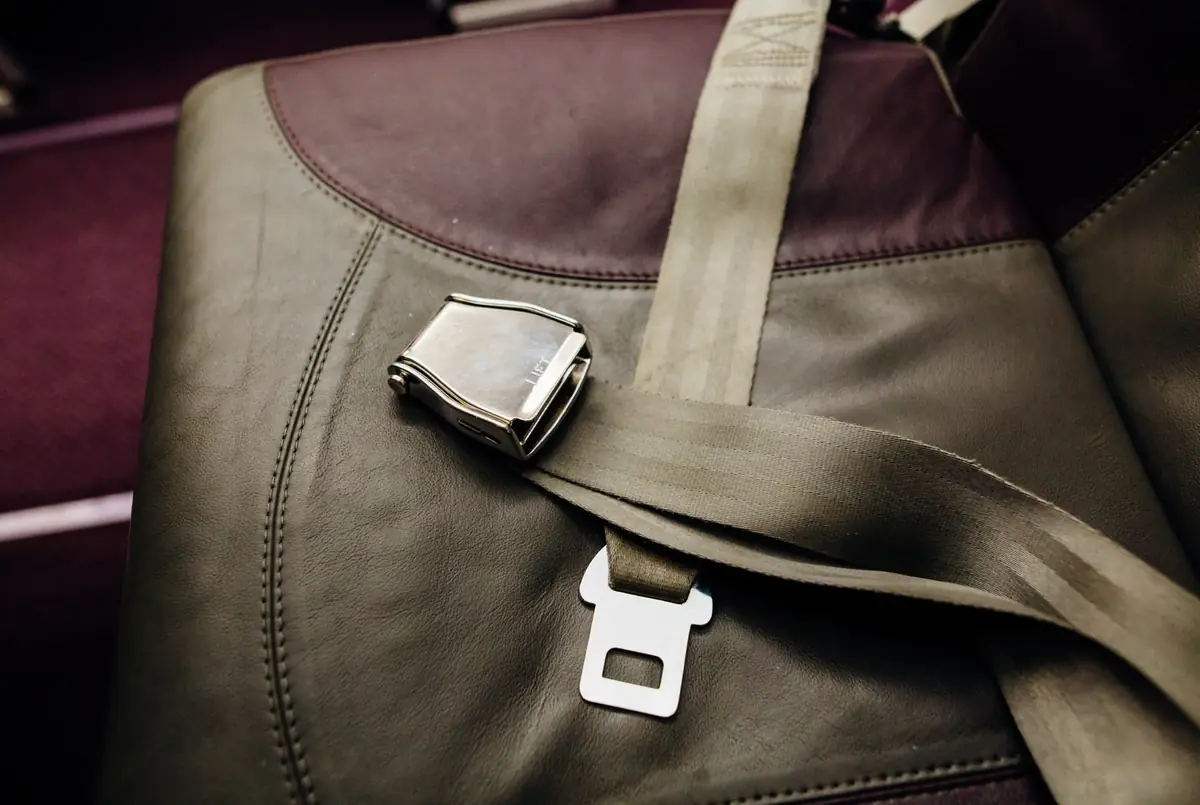 Background
The three-point belt in a modern car is such a settled piece of design that it is easy to assume it arrived fully formed. It did not. Each element of it — the diagonal section, the sliding tongue, the retractor, the locking mechanism — exists because a simpler arrangement was tried first and its limitations became apparent in use.
This is a background guide rather than a historical account, and we have deliberately avoided attaching dates, figures or attributions we cannot substantiate. What it does instead is trace the design logic: what each stage solved, what it left unsolved, and why several of the earlier formats remain entirely appropriate in industrial and specialised seating today.
Stage one: the lap strap
The earliest occupant restraints were straightforward: a strap across the hips, anchored at two points, adjusted by hand. The reasoning was sound and remains sound — the pelvis is comparatively well suited to accepting load, and a strap across it will keep an occupant in the seat.
What the format did not address was the upper body. With the pelvis restrained and the torso free, an occupant can still rotate forward about the hips. The lap belt solved the problem of remaining in the seat without solving the problem of what the upper body does next.
The second limitation was practical rather than mechanical: the belt had to be adjusted by hand every time it was worn. Fastened too loosely — which is what happens when adjustment is a chore — it does considerably less than it was designed to.
Neither limitation makes the format obsolete. In seating where the occupant is upright, does not need to move far, and the primary requirement is remaining in the seat, a two-point lap belt remains the correct design and is widely used in industrial and operator seating for exactly that reason.
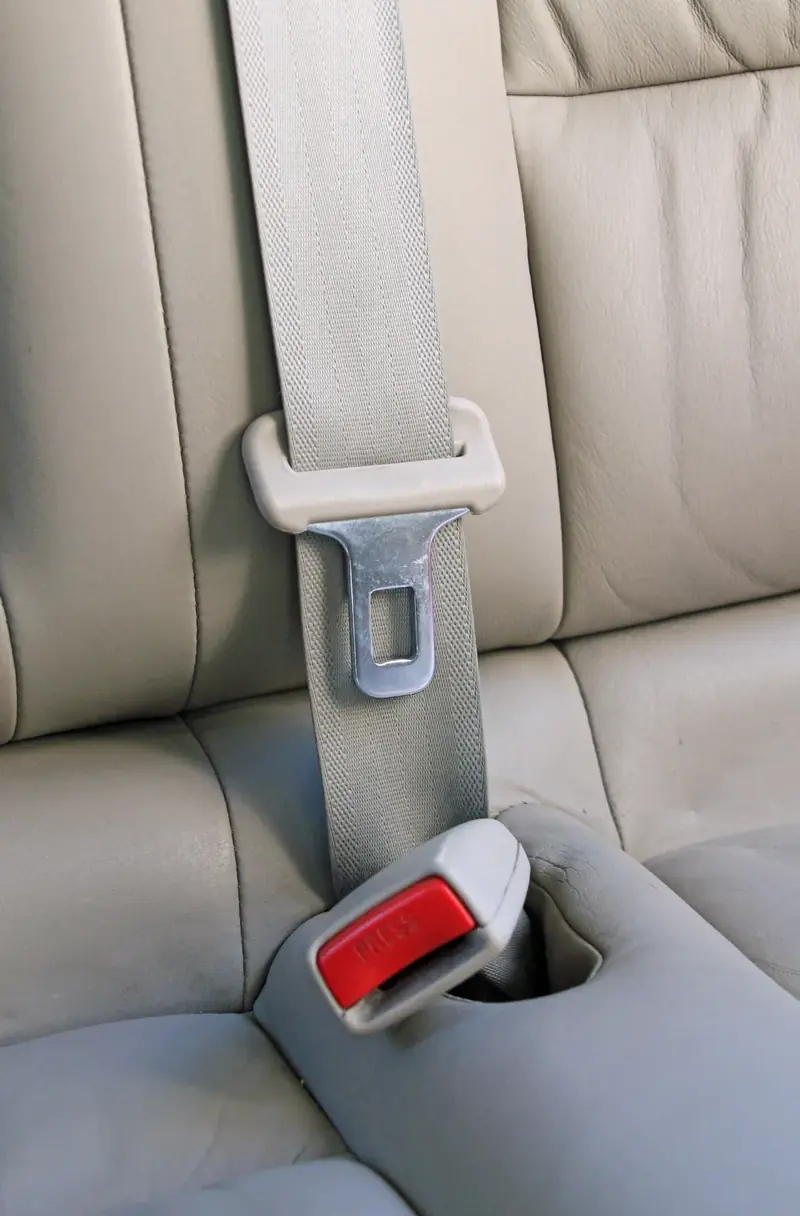
Stage two: adding the diagonal
The obvious response to torso rotation was a second strap running diagonally across the upper body. Early implementations treated this as an additional, separate belt — two straps, two buckles, two adjustments.
Mechanically this addressed the problem. Practically it made things worse. Two separate belts meant twice the fastening effort and twice the adjustment, and the predictable consequence was that people used one and not the other, or neither.
A restraint that is inconvenient enough to skip provides no protection at all, however well it performs when worn. Almost every subsequent development in restraint design is a response to that observation.
Stage three: one strap, three points
The insight that produced the modern belt was that the lap section and the diagonal section could be a single continuous strap, anchored at three points, with a tongue that slides freely along the webbing and engages a single buckle.
This is elegant for several reasons at once. One motion fastens the whole arrangement, so the convenience objection disappears. One buckle means one thing to find and one thing to release. And because the tongue slides, webbing can distribute between the lap and diagonal sections, letting the belt find its own position across an occupant instead of requiring two separate adjustments.
That last property is easy to overlook and does a great deal of work. It is why a three-point belt accommodates occupants of markedly different builds without adjustment, and why the sliding tongue seizing up is a fault worth taking seriously rather than a minor annoyance.
Stage four: automatic take-up
The three-point arrangement solved fastening but left slack. A belt of fixed length is either loose on a smaller occupant or tight on a larger one, and manual adjustment brought back the inconvenience the format had just eliminated.
The retractor addressed this by storing webbing on a spring-loaded spool. The spring is deliberately weak — enough to take up slack and keep the belt against the occupant, gentle enough not to feel restrictive. Webbing pays out when drawn and returns when released, with no adjustment required at all.
This created a new problem in turn. A spool that pays out freely will keep paying out during exactly the event the belt exists for. Free extraction is desirable in ordinary use and precisely wrong in an emergency, which is what made the locking mechanism necessary.
Stage five: knowing when to stop
The locking mechanism is what converts a convenient reel into a restraint component. It must distinguish between an occupant reaching for something — where webbing should pay out — and a sudden event, where it must not.
Two approaches are commonly described, and many mechanisms combine them. Webbing-sensitive locking monitors how quickly webbing is being drawn from the spool and locks above a threshold rate. Vehicle-sensitive locking responds to the vehicle’s own movement, typically through an inertial element that displaces beyond a defined threshold.
Both approaches share a consequence that matters enormously in practice: the mechanism senses relative to its own mounting. That is why retractor orientation is part of a specification rather than an installation preference, and why it is the detail most often got wrong in retrofit work. Our guide on seat belt retractors goes into how this works.
Stage six: from component to system
The final shift is conceptual rather than mechanical. A belt stopped being an accessory fitted to a seat and became one element of an occupant restraint arrangement designed as a whole — seat, anchorages, structure and belt considered together rather than separately.
For anyone supplying or fitting parts, this is the most consequential idea on the page. It is what makes “does it bolt on?” an insufficient question. A restraint designed as part of a system has geometry, travel and behaviour that assume the rest of that system, and substituting a component that satisfies the mounting interface while ignoring the rest is exactly the error the systems view exists to prevent.
Why earlier formats survive
It would be a mistake to read this sequence as simple progress, with each stage rendering the previous one obsolete. Each stage solved a problem in a particular context, and where that context does not apply, the earlier format is frequently the better engineering answer.
- Static two-point belts remain correct in industrial and operator seating, where the occupant is upright, does not need to move far, and simplicity means fewer things to degrade in a harsh environment.
- Manual adjustment is entirely appropriate where a seat has one regular occupant and adjustment is a one-time act rather than a daily chore.
- Alternative release hardware persists in specialised seating, where operators are trained on a particular action and consistency matters more than conformity with automotive convention.
- Fixed-length webbing suits positions where belt travel is genuinely constant, and avoids a mechanism that would only add failure modes.
This is why our application-specific solutions are worked through from the seat and the environment rather than from the assumption that the newest format is automatically the right one. Sophistication that a position does not need is not a benefit — it is additional complexity in something that has to keep working.
Frequently asked
Because they solve a problem that road vehicles have and much industrial seating does not. Three-point arrangements address upper-body movement in occupants who need freedom of movement while belted. Many operator seating positions have an upright occupant who does not need to move far, where a two-point lap belt is simpler, has fewer failure modes, and stands up better to dust, moisture and vibration.
No. It is a different design suited to different conditions. Static belts have no spool, no return spring and no locking mechanism, which means three fewer things to degrade — a real advantage in harsh environments. Where a position was designed around a static belt, that is the correct format for it, and fitting something more elaborate does not improve it.
It is what lets one continuous strap serve as both the lap section and the diagonal section. Because webbing can move through the tongue, the belt distributes between the two sections and finds its own position across occupants of different builds without adjustment. If a tongue that used to slide has become stiff, the belt loses that self-adjusting behaviour, which is why it is worth investigating rather than living with.
The core arrangement has been settled for a long time, which is generally a sign that a design is working. Refinement continues in materials, mechanism detail and how restraints integrate with the rest of a vehicle’s occupant protection. We would rather not speculate about specific developments we cannot verify — for what applies to a particular vehicle, its manufacturer is the authority.
More than it might seem. Understanding why each element exists makes it much clearer why substituting one format for another is not a neutral act — you are removing something that was added to solve a specific problem. It also explains why an older, simpler format on a piece of industrial equipment is a deliberate design choice rather than an oversight to be corrected.
A note on scope
This is general explanatory material, written from working familiarity with seat belt products. It is not a repair procedure for any specific vehicle or machine. Requirements vary by vehicle and application, and users should consult relevant manufacturer guidance for their own equipment. Anything you are unsure about should be referred to a competent technician who can examine the system directly.
Related articles
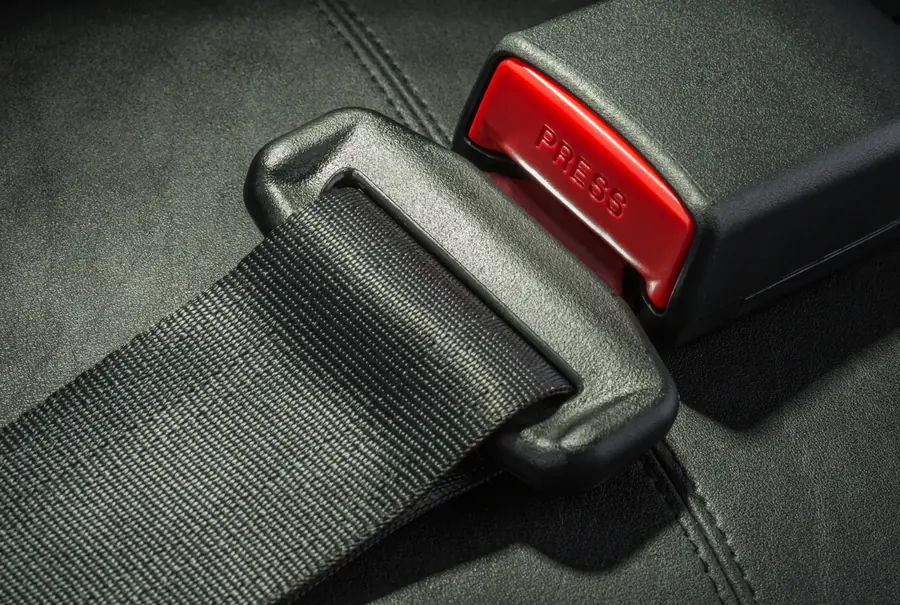 Fundamentals
What Is a Seat Belt System and How Does It Work?
Every part in the chain, what each one does, and how they behave together during normal use and sudden deceleration.
Read Article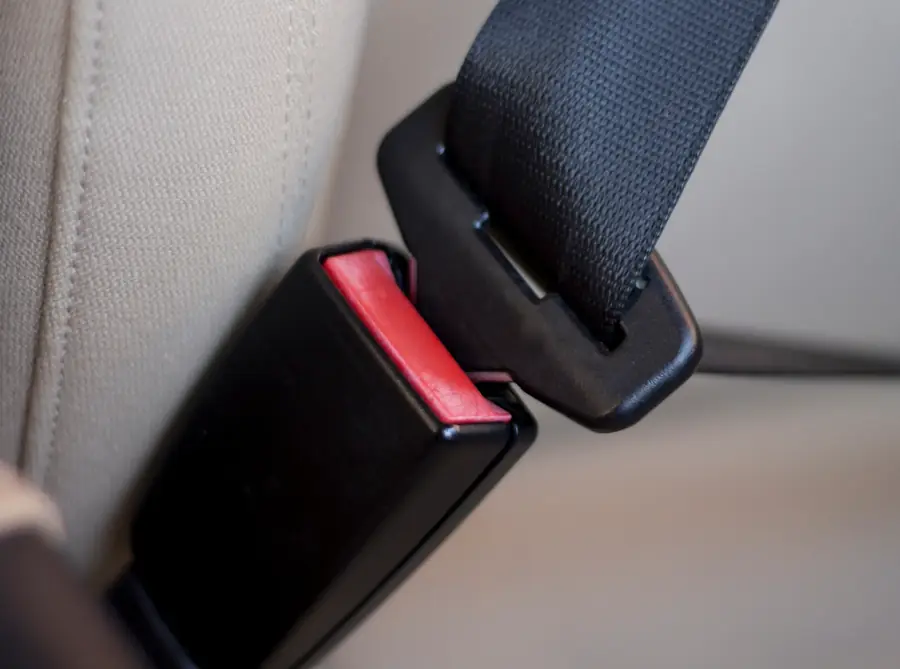 Mechanism
Understanding Seat Belt Retractors
Spool, spring and locking mechanism — why a belt pays out smoothly but grabs when tugged, and what ALR and ELR mean in practice.
Read Article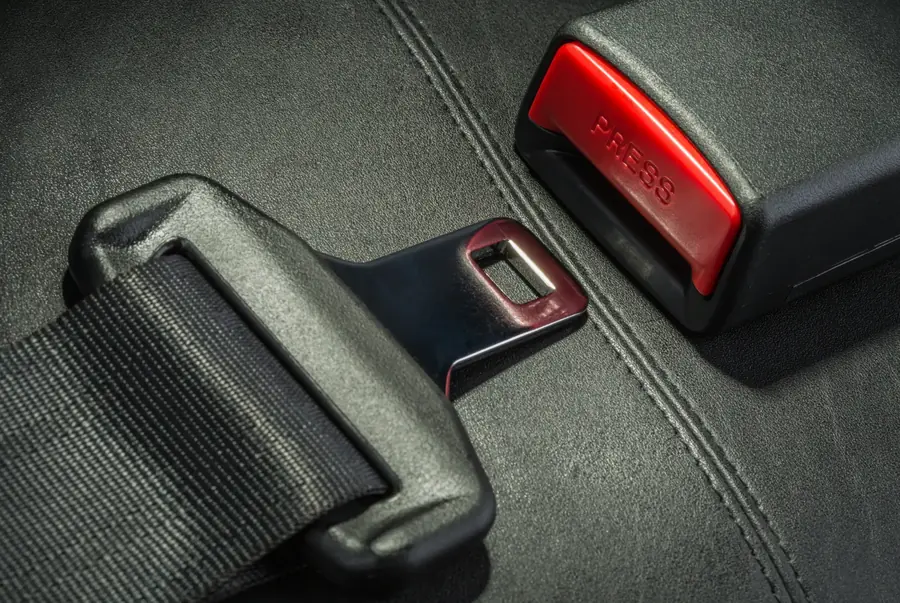 Formats
Different Types of Seat Belt Assemblies
Two-point, three-point, static and retractor formats — what each one is for, and where substituting one for another causes problems.
Read ArticleWorking with an older or unusual belt format?
Send us a photograph of the assembly and its mounting. Older and non-standard formats are among the more interesting enquiries we get, and we are usually able to place them.