Factors to Consider When Selecting Seat Belt Components
Almost every wrong part we have ever been asked to replace was wrong for one of six reasons. This guide sets out what to measure, what to photograph, and which comfortable assumptions cause the most trouble.
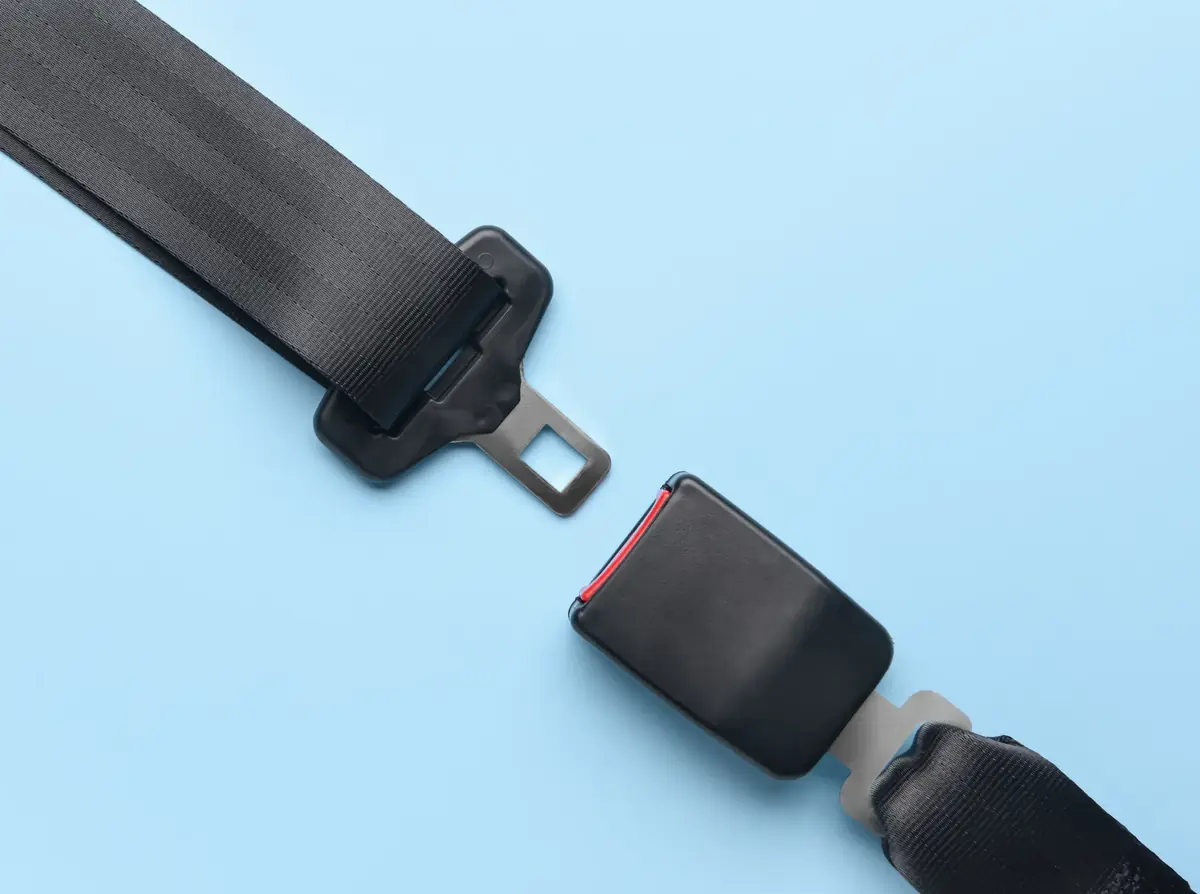 Selection
Selecting a seat belt component is not difficult, but it is unforgiving. There is no tolerance to absorb an approximate answer: a belt is either long enough at full seat extension or it is not, a tongue either seats correctly in a buckle or it does not, a bolt either matches the thread or it does not. Nothing here averages out.
What follows is the checklist we work through internally on every enquiry, written out so you can work through it before contacting anyone. If you can answer these, you can be confident of getting the right part from us or from anyone else.
The six factors that decide fitment
- Anchorage layout. How many mounting points the position uses, where they sit, and whether they belong to the seat or to the structure. This single answer eliminates most of a catalogue before any other question is asked.
- Belt travel. How much webbing must pay out and return, measured at the seat’s most demanding settings rather than at the position it happens to be in.
- Retractor requirement and orientation. Whether the position needs a retractor at all, and if so, the plane and angle it must be mounted in.
- Hardware interface. Bolt thread and length, stalk length, tongue profile and buckle type — the mechanical details that decide whether the part physically integrates.
- Environment. Dust, moisture, sunlight, vibration and temperature range, which affect both selection and how often the part will need replacing.
- Occupant and usage pattern. Who uses the position, how often it is buckled and released, and whether the seat is shared between people of very different builds.
Factors one to four decide whether a part will work. Factors five and six decide how long it will keep working, and are the ones most often skipped.
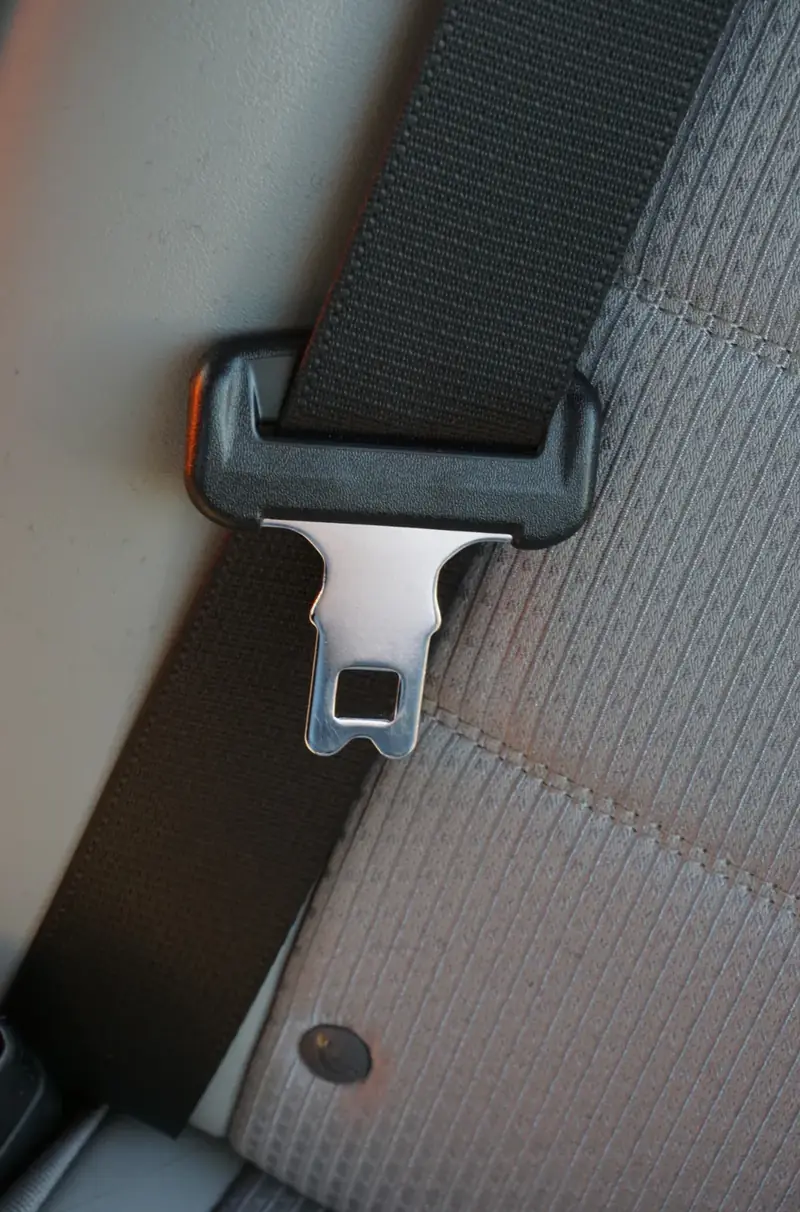
What to actually measure
Measurements beat descriptions every time. These are the ones worth taking, in the order they usually matter.
| Measurement | How to take it | Why it matters |
|---|---|---|
| Total webbing length | Extract the belt fully and measure the whole strap, anchor to anchor | Determines whether the belt reaches at the seat’s furthest setting |
| Webbing width | Across the strap at any clean point | Must match the tongue slot, loop aperture and hardware apertures |
| Stalk length | From the mounting face to the buckle mouth | Decides whether the buckle sits where the occupant can reach it |
| Bolt thread and length | Thread gauge if available; otherwise photograph the bolt beside a ruler | Non-negotiable — a near-fit thread is not a fit |
| Tongue plate thickness | Across the plate at the engagement area | Determines whether the tongue seats properly in the buckle |
| Anchor point spacing | Between mounting centres | Confirms the anchorage layout and the geometry the belt works through |
| Seat travel range | Distance between furthest forward and furthest rearward positions | Feeds directly into the belt travel requirement |
What to photograph, and how
For most enquiries, four photographs replace several rounds of description. They do not need to be good photographs — they need to be clear and to include something for scale.
- The belt in place. Wide enough to show the whole assembly and its route across the seat, so the format is immediately obvious.
- The buckle and stalk. Close, from the side, showing the mouth of the buckle and how the stalk mounts.
- The tongue. Flat, from directly above, with a ruler alongside. The tongue profile is what most component matching turns on.
- Every mounting point. Including the bolt head, with a ruler in frame. If a mounting point is behind trim, say so rather than omitting it.
Always include a tape measure, a ruler or a coin in frame. Without scale, a photograph of a tongue plate is a picture of a shape, and shapes that differ by two millimetres look identical on a screen.
The assumptions that cause the most wrong parts
These are the six we see most, roughly in order of frequency.
- “Same model, so same belt.” Model years, trim variants and body styles differ in webbing length, tongue profile and retractor mounting without any visible external clue. Model alone is not a specification.
- “Left and right are the same.” They are frequently mirror images with genuinely different webbing and stalk lengths. Always state which side.
- “It clicks, so it matches.” Clicking establishes that a tongue enters a buckle. It does not establish that the engagement is what either part was designed for.
- “It fits at this seat position.” Belts are usually checked at whatever setting the seat is in, which is rarely the demanding one. Check at full rearward and most reclined.
- “Any bolt of the right diameter.” Thread pitch, length and head type all matter, and anchorage fasteners are load-bearing rather than incidental.
- “The retractor just bolts on.” Orientation is part of the specification. A mechanism sensing vehicle movement does so relative to its own mounting plane.
“It bolts on” is a statement about a hole. It is not a statement about whether the part suits the position.
Letting the environment inform the choice
Two identical belts fitted to two identical seats can have very different service lives if one lives in an air-conditioned cabin and the other on an open tractor. This is worth factoring into selection and, more importantly, into inspection intervals.
- Ultraviolet exposure. Belts left extended in direct sunlight age faster than those allowed to retract. On open cabs this is a primary ageing factor.
- Dust and particulates. Work into buckle housings and stiffen release action, and abrade webbing where it passes through loops.
- Moisture and chemicals. Corrode anchor hardware and plating; some substances affect webbing fibres directly.
- Vibration. Loosens fasteners that were correctly torqued when fitted, which is why anchorage checks matter more on machinery than on road vehicles.
- Temperature cycling. Repeated heating and cooling affects plastics and moulded components before it affects webbing.
- Cycle count. High-frequency buckling wears release mechanisms and retractor springs faster than mileage alone would suggest.
Where environment is severe, the sensible response is usually a shorter inspection interval rather than a different part. Our inspection awareness guide covers what to look at.
Component or complete assembly?
The last decision is whether to replace the failed part or the whole set. A workable rule:
- Component is appropriate when the failing part can be positively identified and matched, and the rest of the system is sound — a seized release button, a cracked trim cover, a corroded anchor bolt, a worn pillar loop.
- Assembly is appropriate when tongue and buckle matching cannot be established with confidence, when webbing shows wear anywhere along its length, when the anchorage arrangement is being altered, or when the position is new and has nothing to match.
When the two are genuinely balanced, take the assembly. The saving on components is small and the cost of an approximate match in a restraint is not.
Frequently asked
Usually, yes. Part numbers are helpful but rarely essential. Clear photographs of the belt, the buckle and stalk, the tongue and the mounting points — with a ruler in frame for scale — combined with the vehicle or equipment details are normally enough to identify the format and the interface. Where genuine ambiguity remains, we will tell you which specific measurement to take rather than guess.
Set the seat to its furthest rearward position with the backrest at its most reclined usable setting and any height adjustment at its least favourable point. Then have someone of a larger build sit in it, fasten the belt, and check how much webbing remains on the retractor. That combination is the demanding case, and it is the one that determines the requirement — not the mid-position setting a belt is usually assessed at.
Yes. Webbing width has to match the tongue slot, the pillar loop aperture and any adjuster the belt runs through. Webbing that is too narrow can shift and bunch within hardware designed for a wider strap; webbing that is too wide will bind and drag, which degrades retraction and wears the edges. It is a small dimension with disproportionate consequences.
No. Anchorage fasteners are load-bearing, and thread pitch, length and head type are all part of the specification. A bolt that turns into a hole is not the same as a bolt that is correct for it. Where a vehicle or equipment manufacturer specifies fasteners and torque values for a restraint anchorage, use those and have the work carried out by a competent technician.
Where a manufacturer specifies a particular part for a position, follow that guidance. Where an equivalent is being considered, it needs to match on the factors that govern fitment — anchorage layout, webbing length and width, tongue and buckle pairing, hardware interface, and retractor behaviour and orientation. Matching on some of those and not others is what produces a part that installs and then disappoints.
A note on scope
This is general explanatory material, written from working familiarity with seat belt products. It is not a repair procedure for any specific vehicle or machine. Requirements vary by vehicle and application, and users should consult relevant manufacturer guidance for their own equipment. Anything you are unsure about should be referred to a competent technician who can examine the system directly.
Related articles
 Fundamentals
What Is a Seat Belt System and How Does It Work?
Every part in the chain, what each one does, and how they behave together during normal use and sudden deceleration.
Read Article Mechanism
Understanding Seat Belt Retractors
Spool, spring and locking mechanism — why a belt pays out smoothly but grabs when tugged, and what ALR and ELR mean in practice.
Read Article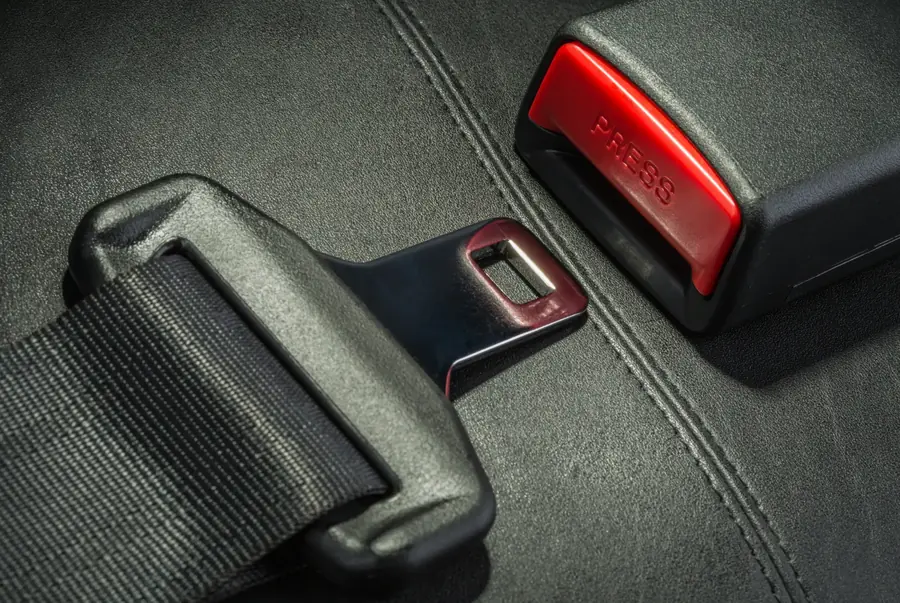 Formats
Different Types of Seat Belt Assemblies
Two-point, three-point, static and retractor formats — what each one is for, and where substituting one for another causes problems.
Read ArticleWorked through the checklist?
Send us what you have — measurements, photographs, or just the vehicle and the position. We will tell you what suits it, and what is still missing if anything is.